
A key part of the project is the analysis of individual inscriptions in the dataset. This involves work on previous editions and analysis of archival and photographic material, the use of squeezes, and autopsy of inscriptions where possible.
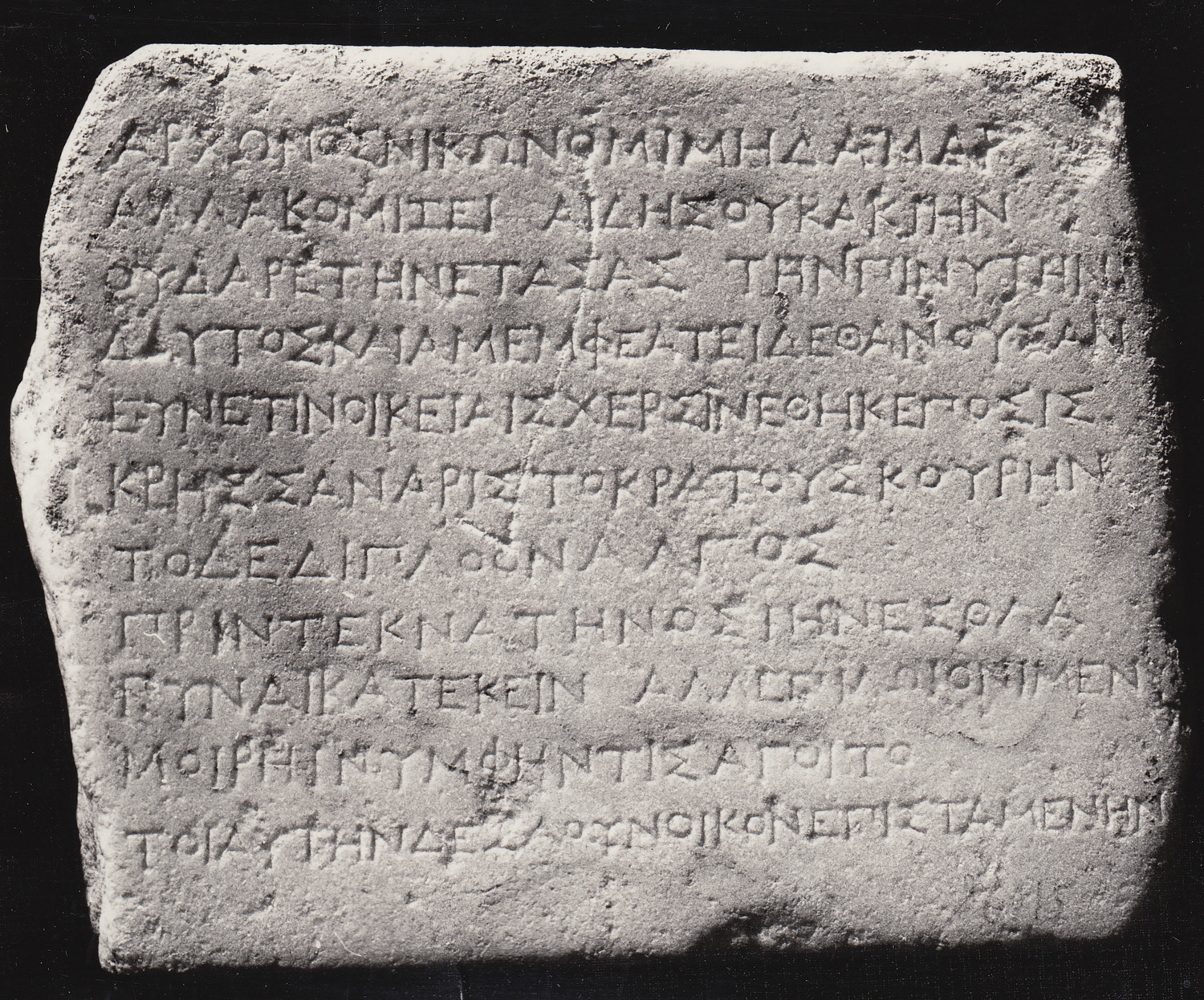
GVI 866 = I.Métriques 28 = CPI 66, Funerary epigram for a woman named Niko, Alexandria, Egypt, 3rd cent. BC, image ©CSAD Oxford (CPI).
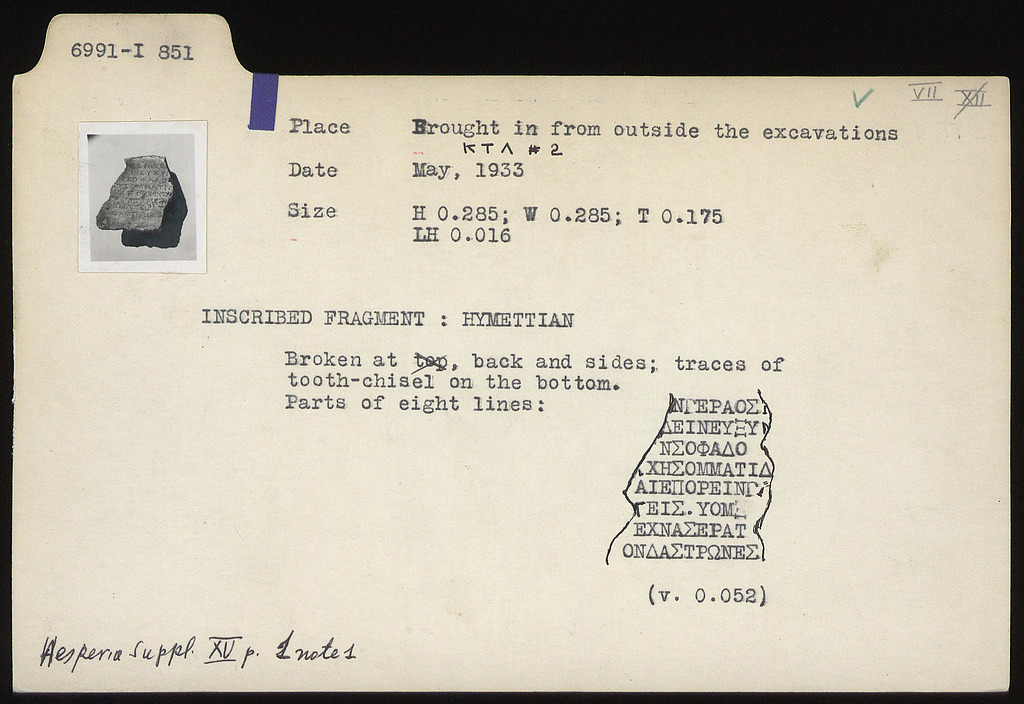
In March 2026, Davide Massimo stayed in Athens at the British School at Athens to conduct visits to archaeological sites and epigraphic collections. One of the main purposes was to aid in the completion of a journal article on Greek and Roman inscriptions related to doctors.
Image: Agora Card: I 851 (ASCSA) related to IG II2 3783, 2nd century BC metrical inscription found in the Agora at Athens which commemorates the doctor Argaios. More info at AIO.
In October 2025, Davide Massimo stayed at the Laboratoire HiSoMA at the Maison de l’Orient et de la Méditerranée in Lyon to present results of ongoing epigraphic research and to discuss scientific collaborations with local researchers.
This was also a good chance to visit the epigraphic collections of the Lugdunum Musem and Roman theatres, which include some pieces of incredible historical importance such as the Tabula Lugdunensis.
Image: Tabula Ludgunensis, inscribed bronze tablet bearing a transcription of a speech by emperor Claudius regarding admission to the senatorial class (photo by Rama via WikimediaCommons, CC BY-SA 2.0 fr).

